
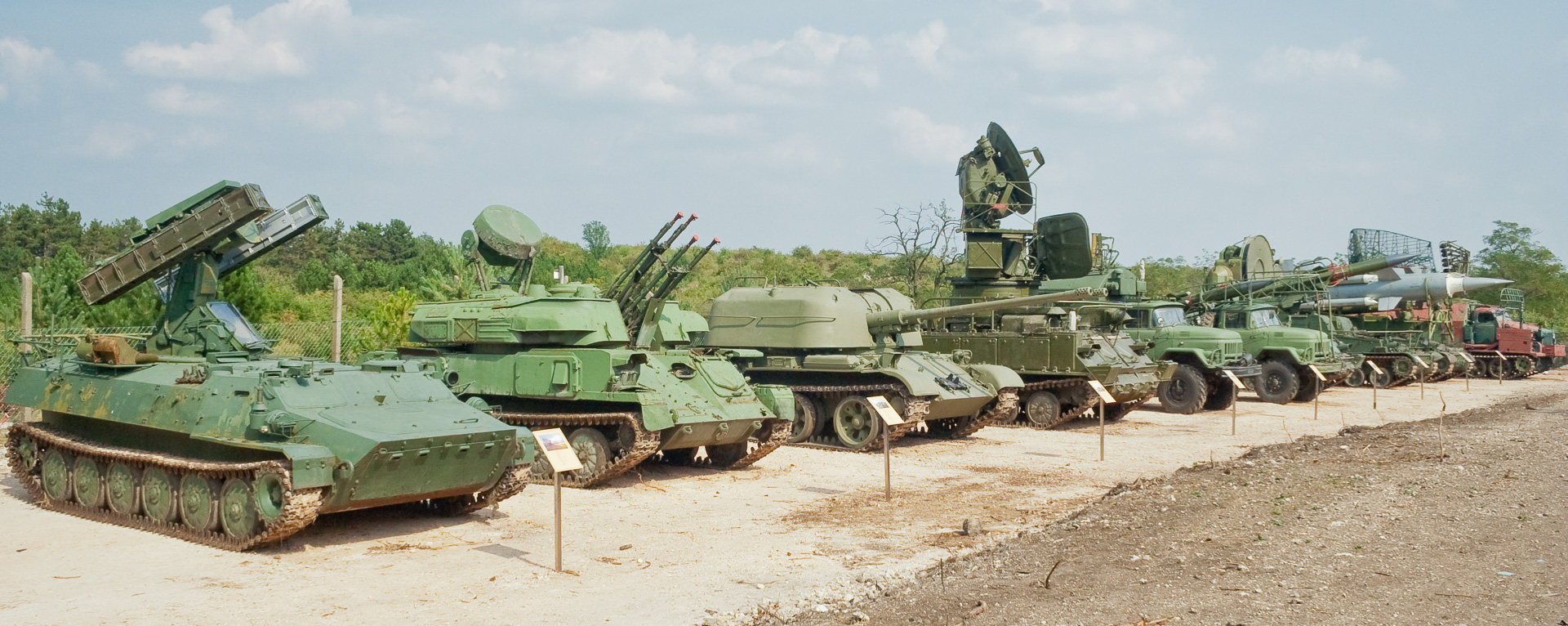
Secret military installations have always attracted rumours and speculation, although even people living nearby rarely knew much about them for certain. Today, with the internet and satellite imagery available through services such as Google Earth, keeping such facilities hidden has become considerably more difficult. Genuinely sensitive installations may still remain shrouded in secrecy, but the abandoned military sites of the Cold War are now relatively easy for anyone to explore. One fascinating example is the network of surface-to-air missile sites that once formed a defensive ring around Budapest.
Editor’s note (September 2026): This article is an expanded version of a piece I originally published in 2011. Some of the information reflects the situation at that time and may no longer be current.
Those who grew up during the Cold War will probably remember the familiar sign: a crossed-out camera on a blue rectangular background, indicating that photography was prohibited. Similar signs have become increasingly common again, although the modern version generally features a camera crossed out within a red circle, following the conventional European design for prohibition signs. In socialist Hungary, however, the sign was blue and rectangular, making it look more like an information sign than a prohibition sign – rather like those indicating bus stops, parking facilities or pedestrian crossings.
It was the only blue prohibition sign in the Hungarian Highway Code. Or should we regard it as an information sign after all? As the celebrated Hungarian comedian Géza Hofi once observed, spies must have loved the No Photography sign because it made their job so much easier. After all, it reliably indicated the presence of a secret military installation or some other important facility nearby. Of course, by the early 1960s, American CORONA reconnaissance satellites were already producing remarkably detailed photographs of such installations, comparable in some respects to the imagery now freely available through Google Earth.
If we examine satellite imagery of the formerly restricted areas surrounding Budapest, we can identify fenced compounds with distinctive road layouts. On sites now overgrown with scrub, curious circular structures appear beside the access roads, together with a handful of buildings, some of them clearly protected by earth embankments. These are the remains of the surface-to-air missile sites that once defended the Hungarian capital.
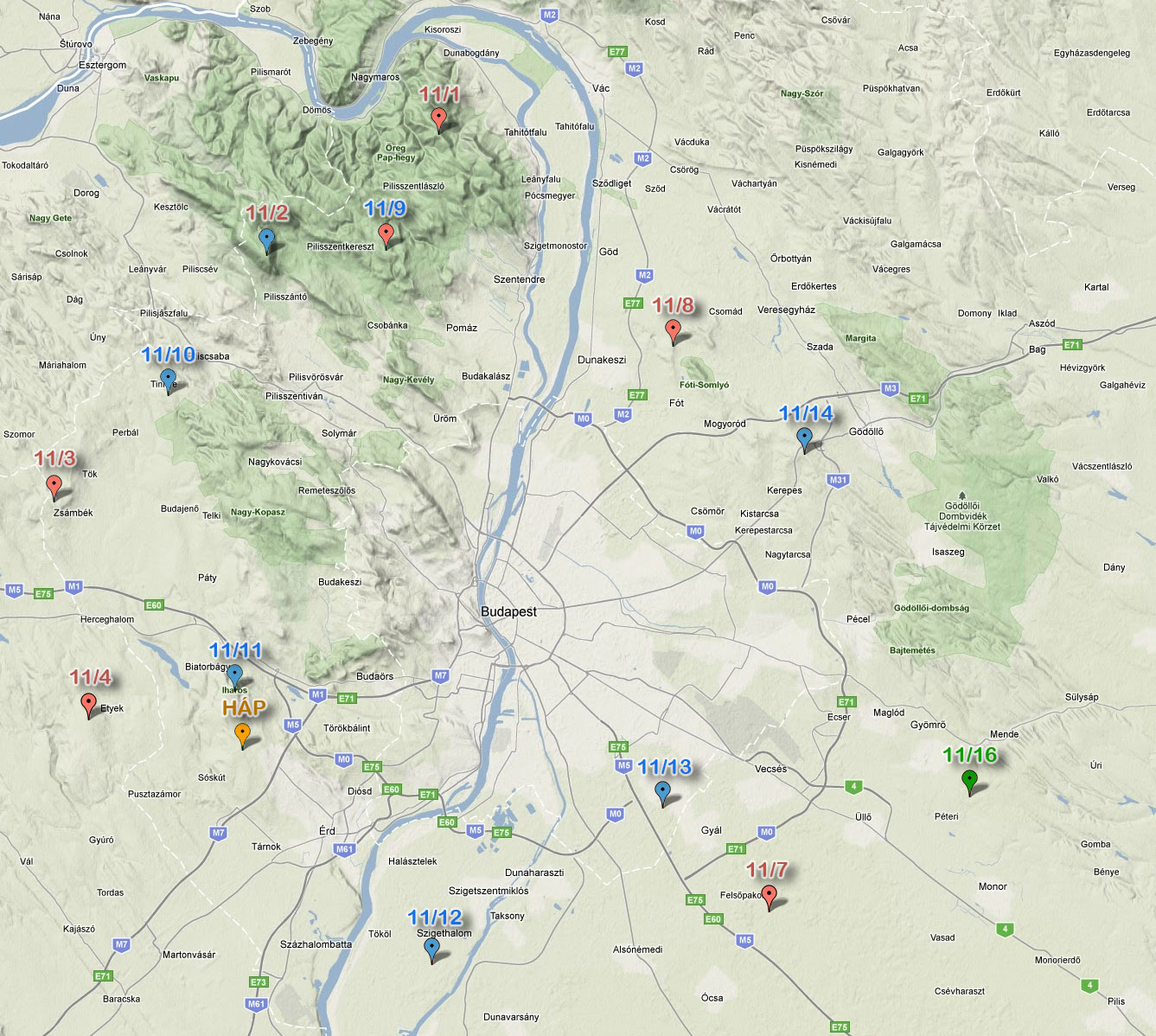
For anyone interested in visiting one of these former firing positions, the following table also provides their GPS coordinates.
| Unit | Missile System | Code Name | Location | GPS Coordinates |
|---|---|---|---|---|
| 11. Lgv dd. | Brigade Command Post | Galecska | Érd | 47°25’24.24″N 18°51’7.17″E |
| 11/1 | Sz-75M Volhov | Cenzor | Pilisszentlászló (Urak asztala) | 47°45’13.28″N 19° 0’25.92″E |
| 11/2 | Sz-75M Volhov | Sétány | Pilisszentkereszt (Pilis) | 47°41’19.74″N 18°52’17.85″E |
| 11/3 | Sz-75M Volhov | Kókusz | Zsámbék | 47°33’18.43″N 18°42’12.37″E |
| 11/4 | Sz-75M Volhov | Pajzs | Etyek | 47°26’16.50″N 18°43’50.44″E |
| 11/7 | Sz-75M Volhov | Boltív | Ócsa (Felsőpakony) | 47°20’2.35″N 19°16’14.93″E |
| 11/8 | Sz-75M Volhov | Búza | Fót | 47°38’24.94″N 19°11’34.48″E |
| 11/9 | Sz-125M Nyeva | Vésnök | Pilisszentlászló (Lom hegy) | 47°41’29.31″N 18°57’56.80″E |
| 11/10 | Sz-125M Nyeva | Gárda | Tinnye | 47°36’50.20″N 18°47’37.26″E |
| 11/11 | Sz-125M Nyeva | Holdfény | Biatorbágy | 47°27’19.63″N 18°50’46.66″E |
| 11/12 | Sz-125M Nyeva | Üzem | Szigethalom | 47°18’29.99″N 19° 0’11.41″E |
| 11/13 | Sz-125M Nyeva | Óda | Gyál | 47°23’30.00″N 19°11’14.48″E |
| 11/14 | Sz-75M Volhov | Atlasz | Kerepes (Bolnoka) | 47°34’49.53″N 19°18’7.20″E |
| 11/15 | Technical Battalion | Rezeda | Börgönd | 47° 8’17.21″N 18°29’41.04″E |
| 11/16 | Sz-125M Nyeva | Nábob | Gyömrő | 47°23’55.94″N 19°25’48.84″E |
From Anti-Aircraft Guns to Guided Missiles
Until 1959, Hungary’s ground-based air defence relied primarily on anti-aircraft artillery, including automatic cannon and machine guns – weapons of the kind still displayed at the Citadel in Budapest. By the early 1960s, however, fighter and fighter-bomber aircraft were capable of reaching, and in some cases substantially exceeding, twice the speed of sound. Their greater speed, manoeuvrability and rates of climb made conventional gun-based air defence increasingly ineffective. The future appeared to belong to surface-to-air missiles.
Between 1959 and 1962, three anti-aircraft artillery regiments were re-equipped with the Soviet S-75M Dvina surface-to-air missile system (NATO reporting name: SA-2 Guideline). At the time, it represented the state of the art in ground-based air defence. A missile of the same family had brought down the American U-2 reconnaissance aircraft flown by Francis Gary Powers over the Soviet Union in 1960.
The next major modernisation programme took place between 1977 and 1985, when the Dvina was replaced by the S-75M Volhov (SA-2E Guideline), S-125M Neva (SA-3B Goa) and S-200VE Vega (SA-5B Gammon) systems.
The remains of the 11th Air Defence Brigade’s Volhov and Neva missile batteries can still be found around Budapest. Both systems remained in Hungarian military service until 2000.
The missiles deployed in Hungary carried conventional high-explosive fragmentation warheads rather than nuclear weapons. They could also be employed against ground targets, where their destructive effect relied primarily on the fragments produced by the exploding warhead. Nuclear warhead variants, reportedly with yields of around 15 kilotons, also existed, but none were deployed in Hungary. Nor did Hungary have any missile silos for these weapons. Unlike intercontinental ballistic missiles, these surface-to-air missiles were launched from above-ground firing positions.
Dvina and Volhov
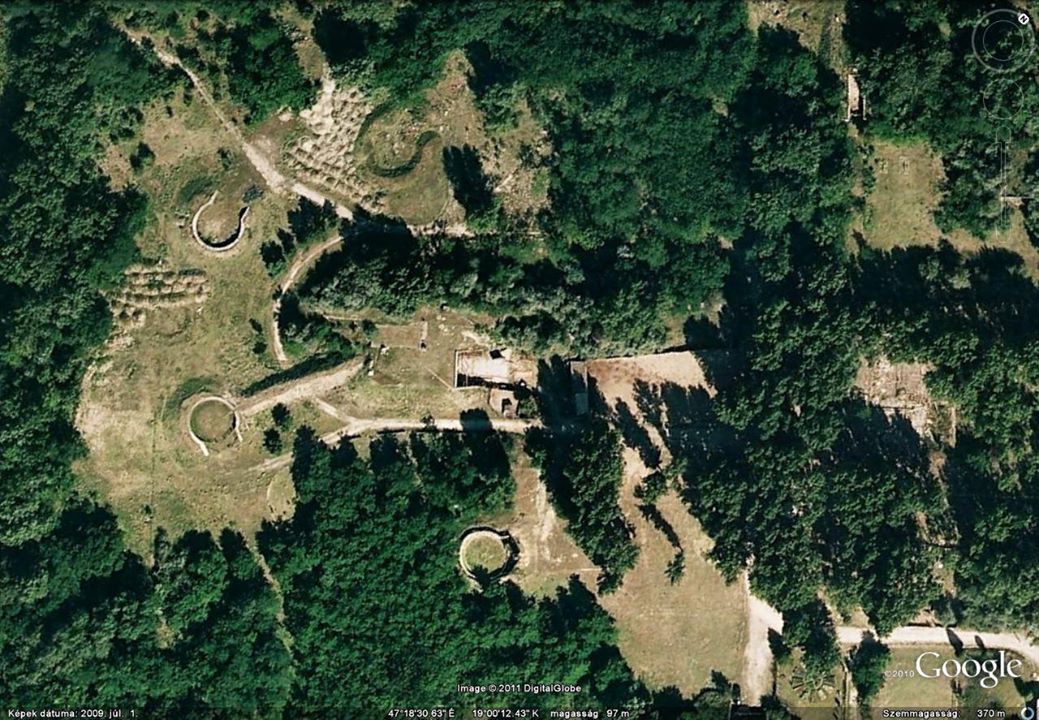
Of all the former firing positions (Hungarian military abbreviation: TÁS), the site at Fót is perhaps the easiest to recognise on Google Earth. Situated immediately beside the vineyards, it still reveals much of its original layout.
Six earth revetments are arranged in a circle around the launch pads (1). The concrete pads once supported the missile launchers. At the centre of the site stands an earth-covered structure, with an entrance on its north-eastern side leading into the missile guidance station bunker (SNR) (2).
Essentially, the bunker consisted of six large bays fitted with substantial steel doors. These housed the combat command post (HÁP) and its associated technical equipment – approximately six trailer-loads in all – including three diesel generators and the central control cabin (UV cabin).
The fire-control radar (PV cabin), with its enormous antennas, was positioned on top of the mound, surrounded by a protective concrete structure (3).
This arrangement left the radar relatively exposed to enemy attack. However, its two transmitters, each rated at 1 MW peak pulse power, could not be installed underground or at any substantial distance from their antennas.
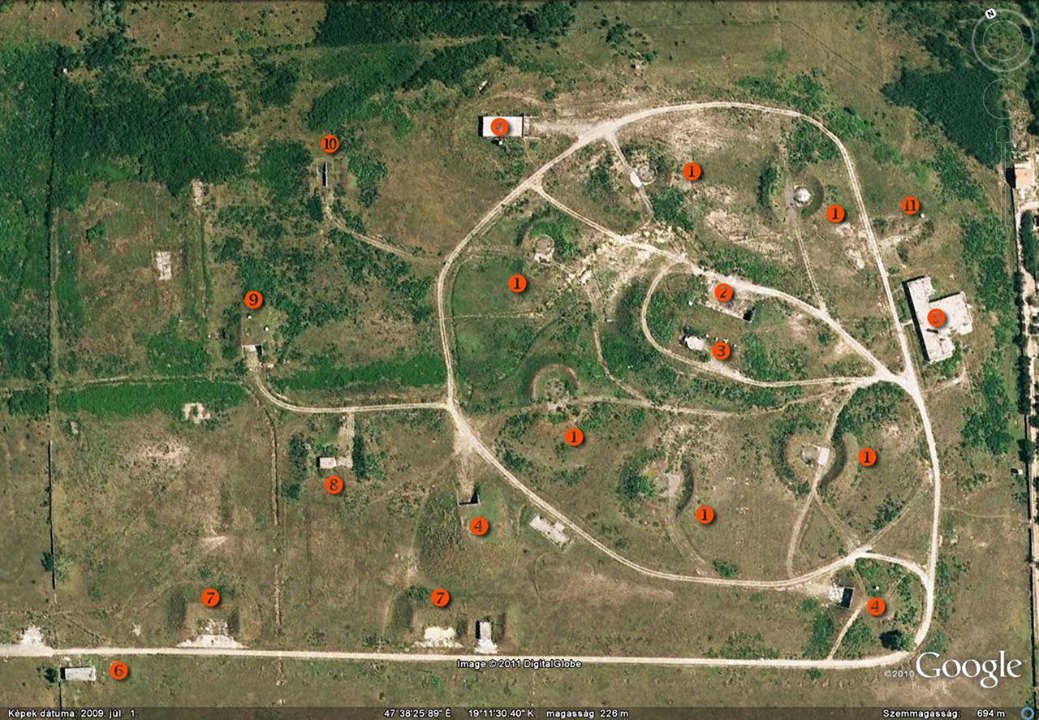
Access roads led to each launch pad, allowing missile transport and loading vehicles to approach the launchers. The vehicles were parked in the section shelters (4), each of which served two launch pads. Every shelter also incorporated a hermetically sealed personnel bunker equipped with air-filtration systems designed to provide protection against chemical agents. The distinctive T-shaped building was the readiness building, also known as Building 10 (5), which typically accommodated up to 40 personnel. In addition to sleeping quarters, it contained a classroom, a dining room and several offices. The firing position maintained its own guard detachment, with the guardhouse and entry control point (EÁP) situated near the main gate (6).
The fuel, designated G material, was an extremely toxic mixture of xylidine and triethylamine in approximately equal proportions. The oxidiser, known as O material, was based on concentrated nitric acid and nitrogen oxides. It was highly corrosive and an exceptionally powerful oxidising agent. The fuel and oxidiser were hypergolic: they ignited spontaneously on contact. Consequently, they had to be handled separately and loaded into the missiles at different fuelling stations.
To the north of these facilities stood the ammunition depot (8), followed by the Cycloid bunker (9). Cycloid was a microwave radio-relay station forming part of the communications network used by the automated command system.
The bunker marked (10), immediately behind it, was probably constructed to accommodate a P-12 long-range surveillance radar. This was subsequently replaced by P-15 and P-18 radar equipment. Since the newer equipment could not be accommodated within the original bunker, it was installed beside Building 10 (11).
Two characteristic structures, Buildings 7 and 7/A, are absent from the Fót site. In this particular case, they remained at the original Dvina position at Vácegres, from which reserve missiles could be transported to Fót when required. This was a common cost-saving measure during the reorganisations of the early 1980s: many units retained their original Building 7 and barracks even after relocating their operational equipment.
Building 7 served as the missile storage facility. Three missiles were mounted on launchers, another three were kept in the section shelters, and, theoretically, up to 30 could be stored in Building 7. The slightly smaller Building 7/A housed vehicles, tractors and a crane. It was also designed, in principle, to provide climate-controlled storage for three missiles fitted with “special” (nuclear) warheads, although such warheads were not deployed in Hungary.
Several missile variants were developed for the Volhov system. Hungary introduced the V-755U (20DSzU) in 1978, followed by the V-759 (5Ya23) in 1983. The latter offered improved manoeuvrability, increasing the maximum permissible acceleration from 6.5 g to 9 g, together with a more effective fragmentation warhead. The earlier missile produced approximately 8,200 fragments, compared with around 29,000 for the later version. The V-759 measured 10.8 m in length and had a launch weight of 2.7 tonnes. Its maximum slant range was 56 km, of which approximately 43 km could be covered during powered flight. Depending on altitude, its maximum speed ranged from Mach 2.6 to Mach 4, while its engagement altitude extended from 100 m to 35 km. Pre-launch preparation time had been reduced from two minutes to just 30 seconds. This improvement came at a cost, however: the period for which the missile could remain in its fully prepared state fell from 25 minutes to only five. After that, it had to be taken out of readiness to prevent its gyroscopes from overheating.
A missile battalion could track and engage only one target at a time, although it could launch up to three missiles against that target in rapid succession. Once the target had been acquired, tracking was performed by the system’s analogue computer. The launch command travelled by cable from the control cabin, through the launcher, to the missile’s onboard systems. Within a few tenths of a second, the missile activated its onboard battery, released compressed air to the pneumatic control system and ignited its booster motor. Flames erupted from the nozzle, and the missile roared into the sky.
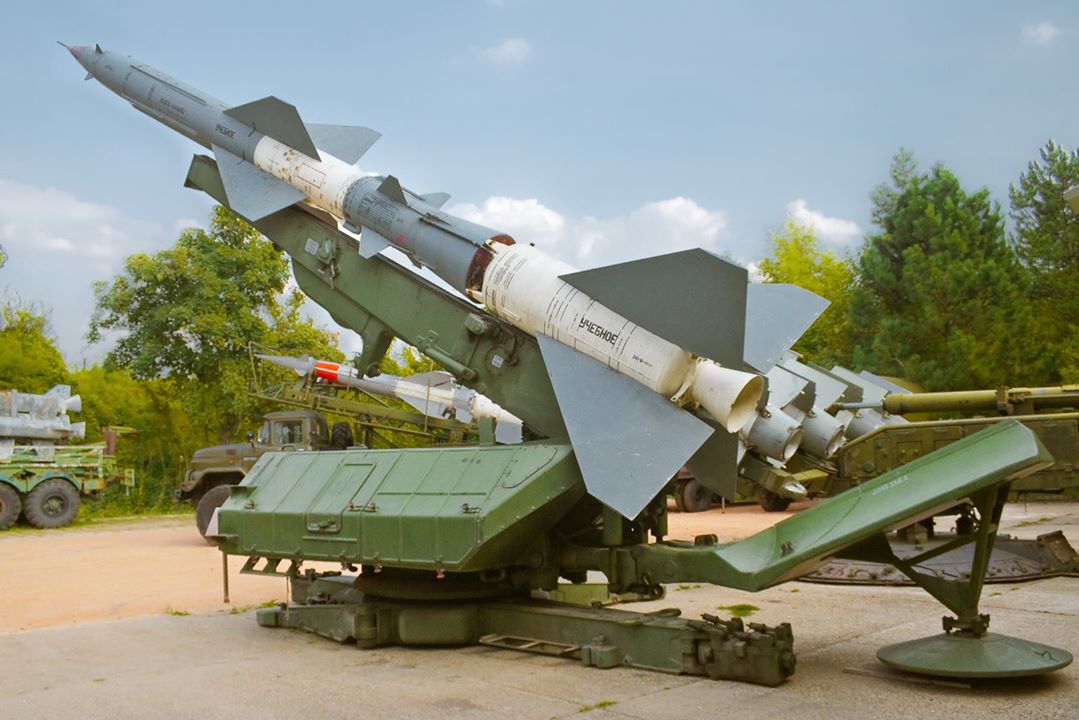
The missile had a two-stage propulsion system. The first stage was a solid-propellant booster containing pressed nitrocellulose-based propellant. Its cylindrical body and large stabilising fins make it readily identifiable in photographs. Although it burned for only about three seconds, its maximum thrust was equivalent to approximately 58 tonnes-force, accelerating the missile to around 2,000 km/h (Mach 1.8). The second stage – the liquid-propellant sustainer – then ignited. Its exhaust burned through the magnesium retaining straps securing the booster, allowing the spent first stage to separate and freeing the missile’s control surfaces. The missile now entered its guided flight towards the target.
Even at this stage, however, it did not detect or track the target independently. Instead, its flight path was controlled by its onboard autopilot, acting on radio guidance commands generated by the ground-based analogue computer. After 40–55 seconds, the fuel was depleted, but the missile coasted for a few more seconds in an unpowered passive phase, or coasting.
If the guidance link was lost for any reason – for example, because the fire-control radar stopped transmitting commands – the missile continued according to a predetermined contingency mode. Depending on the selected setting, it would either follow a ballistic trajectory or climb towards its maximum altitude.
As it approached the target, the radio proximity fuze in its nose detected the aircraft and initiated the warhead. The 201 kg warhead contained approximately 90 kg of conventional explosive. On detonation, it dispersed roughly 29,000 metal fragments, each weighing about 4 g, although the precise number depended on the missile variant. These high-velocity fragments could inflict damage comparable to that caused by rifle projectiles. A direct hit was therefore unnecessary: detonation within approximately 50–100 m of the target could be sufficient for the expanding fragmentation cloud to inflict serious damage.
If the missile failed to intercept its target, an automatic self-destruct mechanism destroyed it. The guidance officer could also initiate self-destruction manually if necessary.
Editor’s note (September 2026): The Airsoft Field – Fót Air Defence Missile Base, formerly home to the Hungarian People’s Army’s MN 3121 Búza surface-to-air missile battalion, is not open to the public for casual visits or exploration. The former military installation is now used as a controlled airsoft venue, hosting organised games and events. Unauthorised entry is prohibited, particularly during games, when visitors without appropriate protective equipment risk serious injury from airsoft projectiles.
If you would like to explore a similar Cold War missile installation legally and safely, consider visiting the Zsámbék Air Defence Missile Base (Hadi Kulturális Központ), which operates as a military heritage and exhibition centre. Please note that access is restricted to scheduled open days or visits arranged in advance. Check the current visiting arrangements before travelling.
The Neva – The Missile That Brought Down a Stealth Aircraft
The smaller Neva missile had a correspondingly shorter range of approximately 25 km. It was primarily designed to engage low-flying, highly manoeuvrable aircraft that were difficult to intercept with the larger Volhov missiles.
The system achieved international notoriety in 1999, when Yugoslav air defences used S-125 missiles to shoot down an American F-117A Nighthawk stealth aircraft and, in a separate engagement, an F-16CG Fighting Falcon. The unit responsible was commanded by Lieutenant Colonel Zoltán Dani, an officer of Székely (Transylvanian Hungarian) origin.
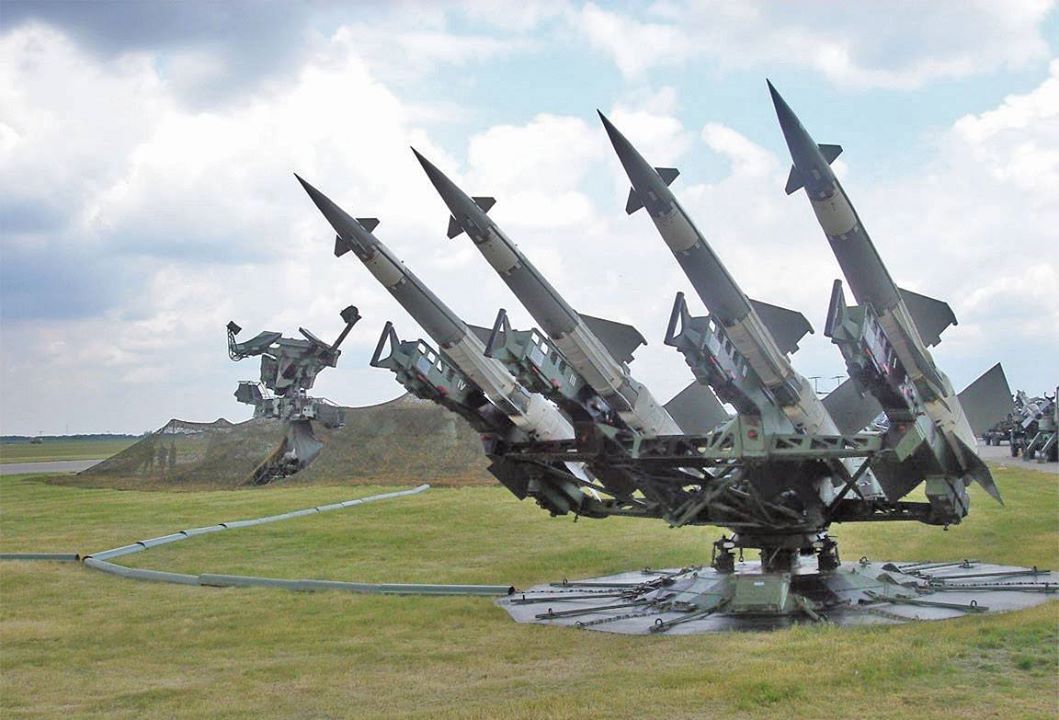
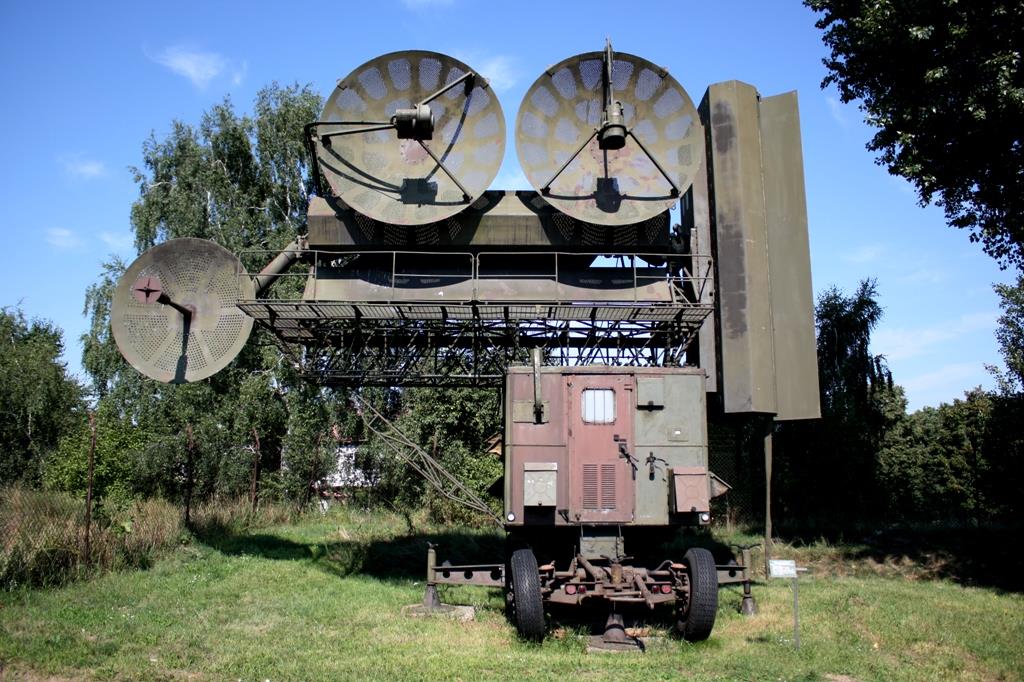
Neva sites are relatively easy to distinguish from Volhov positions. The combat command post (HÁP) comprised only three bays, and the principal radar antenna assembly was the most conspicuous part of the installation above ground. Much of the remaining equipment was housed in protected structures. Another striking difference was the arrangement of the launch pads. The Neva site had four horseshoe-shaped positions around the command post, each served by a dead-end access road rather than a through road. This reflected the different loading arrangements: missile transport and loading vehicles had to reverse towards the Neva launchers rather than pull up alongside them, as they did at Volhov positions.
Both systems used one launcher at each launch position, but whereas a Volhov launcher accommodated a single missile, a Neva launcher could carry four. Neva sites also had no liquid-propellant fuelling facilities, since their missiles used solid propellant.
One principle commonly associated with Soviet military procurement policy was that Warsaw Pact allies received equipment approximately one generation behind that used by Soviet forces themselves – or even two generations behind in the case of politically less trusted countries. In other words, the Soviet Union was generally reluctant to give its allies access to its latest military technology.
Modern Surface-to-Air Missile Systems
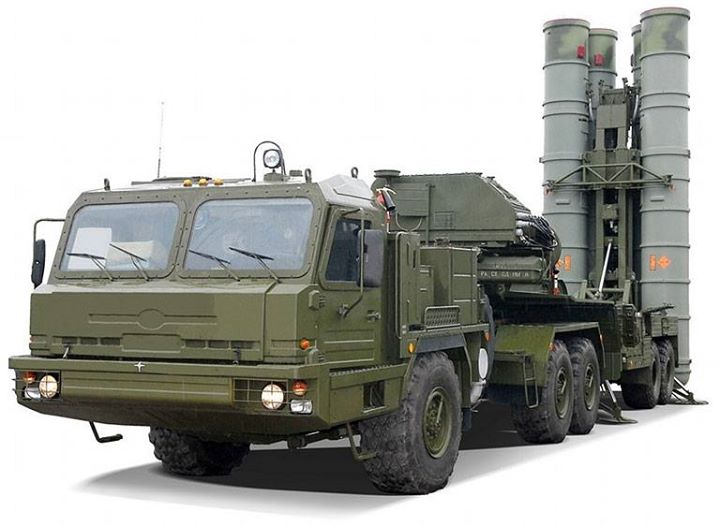
The S-300 family, developed as a successor to earlier Soviet long-range surface-to-air missile systems, began entering service in 1979. By the time of the original article, its successor, the S-400 Triumf, was also being deployed. These systems represented a substantial technological departure from the older Volhov and Neva installations. They were highly mobile, digitally controlled and capable of engaging targets at considerably greater distances – up to a claimed 400 km with the appropriate missile type. Instead of relying on permanently established firing positions that could readily be identified and attacked, they employed mobile launch platforms that could be redeployed relatively quickly.
A typical configuration described at the time comprised 12 launch vehicles, each carrying four missiles – a total of 48 ready-to-launch weapons. Their solid-propellant missiles could remain in storage for extended periods, eliminating the need for routine liquid-propellant handling and much of the preparation associated with earlier systems. The missiles were launched directly from sealed transport-and-launch containers.
In addition to conventional aircraft, these newer systems were designed to engage cruise missiles and certain types of ballistic missile. Their manufacturers also claimed capabilities against low-radar-cross-section targets, including stealth aircraft. Contemporary descriptions of the configuration discussed here specified the ability to guide up to 12 missiles against six targets simultaneously, allocating two missiles to each target. In principle, the mobility, distributed equipment and multiple-engagement capability of such systems made them considerably less vulnerable than the earlier generation of fixed missile sites.
Russian military publicity regularly featured these weapons and promoted the forthcoming S-500 system, which was still under development when the original article was written. Reports of successful tests appeared in the media, alongside an abundance of promotional material on YouTube.
Hungary, meanwhile, never received even the S-300 system, despite plans towards the end of the Cold War to equip two additional battalions – 11/5 and 11/6 – with it. Those plans were never realised. Hungary subsequently pursued a different defence policy, although its integration into NATO’s air-defence structure remained incomplete during the period discussed in the original article. Military analysts had already begun highlighting the potential danger of sudden air attacks, including strikes involving ballistic missiles and remotely piloted or unmanned aircraft. In the absence of suitable defensive capabilities, our most effective response would probably have been to look up, shake our fists, pull a sheet over our heads and crawl towards the nearest hole.
The dismantling of Hungary’s former air-defence network began following the political transition, with particularly significant reductions from 1995 onwards. Permanent operational readiness was discontinued, personnel numbers were reduced, and financial constraints meant that equipment was activated for training and exercises less and less frequently. Fuel consumption was restricted, and at times there was not even enough money to pay the electricity bills. Successive reorganisations gradually deprived units of both their technical equipment and their experienced personnel. Finally, in 2000, the 11th Duna Air Defence Missile Regiment was disbanded. Hungary retained only its shorter-range ground-based air-defence systems, including the 2K12 Kub and Mistral systems stationed at Győr.
Anyone interested in the later history of this branch of the Hungarian armed forces can consult material published by the 12th Arrabona Air Defence Missile Regiment and its successors.
A Missile System in Your Own Home
Today, the former firing positions stand largely abandoned, with scrap collectors having stripped many of them of anything valuable. Yet former servicemen still remember the command:
“From Censor to Atlas, all units READINESS LEVEL ONE!”
In 2005, a small group of enthusiasts started a discussion thread on the Hungarian Index forum entitled Air Defence Missiles in Hungary. Over the following years, the thread developed into an extraordinary repository of technical and historical information. One contributor, known by the username Hpasp, went a step further and developed a free, independently produced surface-to-air missile simulator for civilian use – an unusual achievement and, according to its creator, the first simulator of its kind. The software allows enthusiasts to experience the operation of several historical Soviet air-defence systems, including the S-75M3 Volhov, S-125M1 Neva and 2K11 Krug-M1 (SA-4B Ganef). At the time of the original article, simulations of the Dvina and Shilka systems were also being planned.
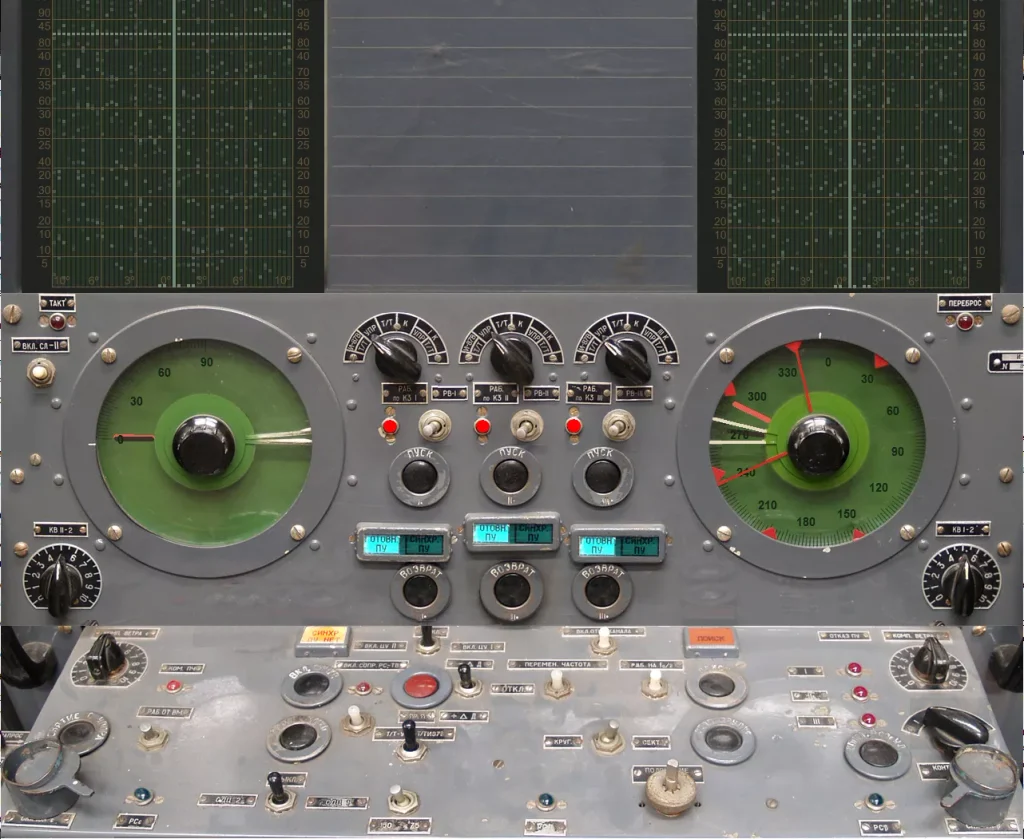
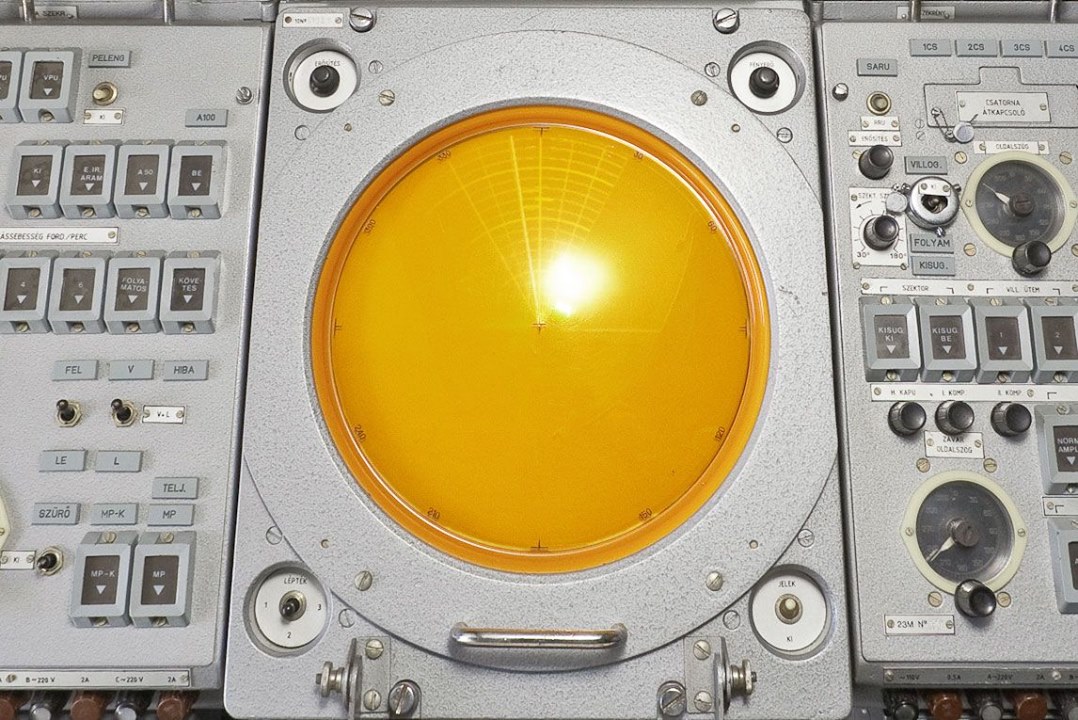
Military specialists have praised the simulator for its technical realism, although anyone expecting spectacular Star Wars-style graphics, animated fighter aircraft or cinematic missile launches will be disappointed. The programme reproduces what the operators of these systems actually saw during combat: instrument panels, switches, indicators and radar displays. Documentation is available in Hungarian, English, Russian, Slovak, Japanese and Chinese, although the control-panel labels retain their original Russian inscriptions. Within Hungary, the simulator can reproduce operational and training scenarios that would otherwise be impossible to experience without access to specialist military facilities or historical equipment. Live missile firing, naturally, can only be experienced at suitable military test ranges – or, in this case, through the recreation of historical engagements.
Editor’s note (September 2026): When the original article was written, the SAM Simulator was available to download free of charge. It’s no longer available from the original source, but I’ve found a Facebook group that has some alternative download links. There are a few videos on YouTube showing the simulator in operation, most of them more than a decade old.
The Zsámbék Air Defence Museum
Retired Lieutenant Colonel Ferenc Hibácskó, known online as Volt tüzér (Former Gunner), and his colleagues devoted considerable effort to establishing a unique air-defence museum at the former missile site in Zsámbék. Created under the auspices of the Military History Museum, the exhibition commemorated the 50th anniversary of missile-based air defence in Hungary. Its opening ceremony was attended by several senior military officers, including retired Colonel Zoltán Dani, who travelled from Serbia for the occasion.
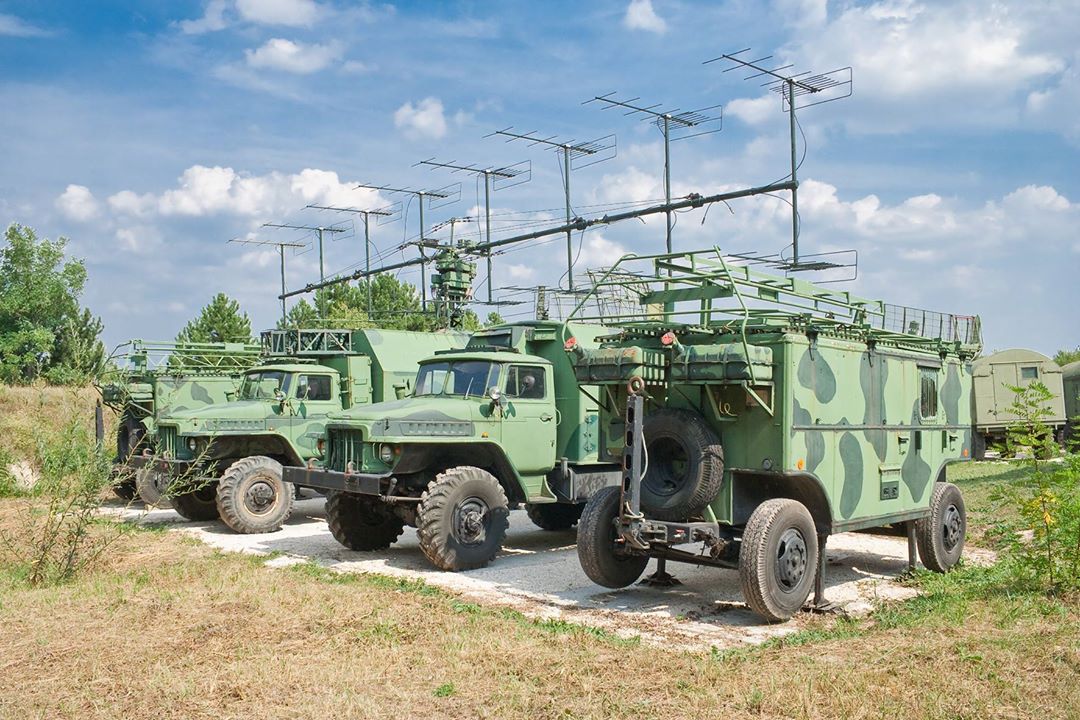
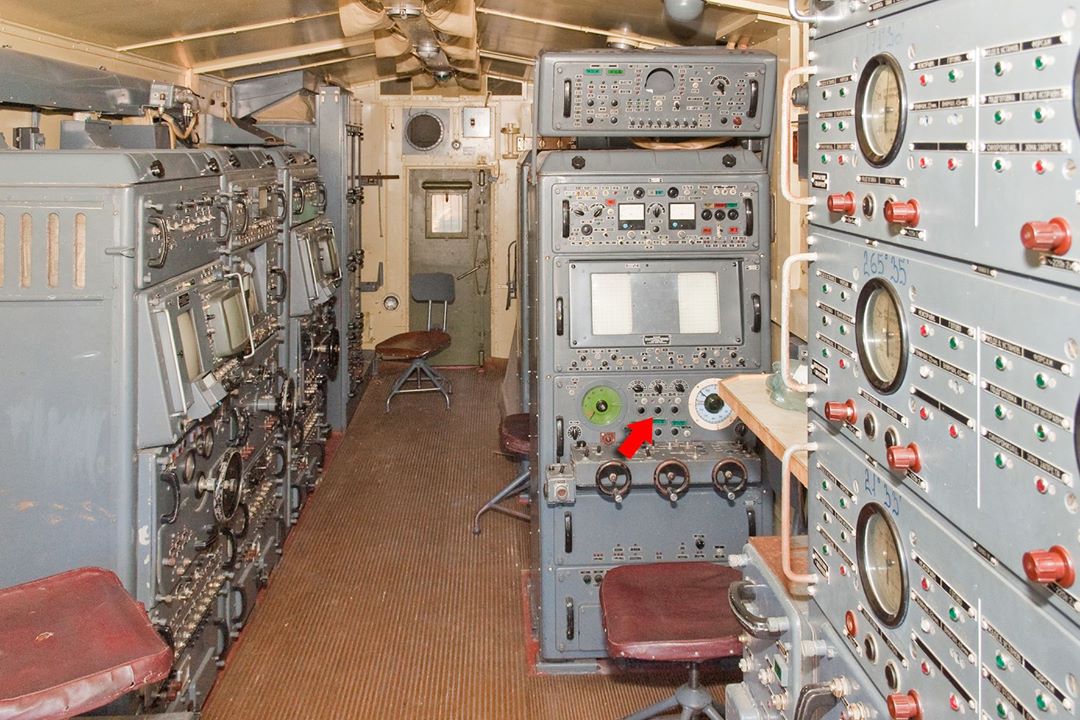
This is where the original article ended. At the time, I continued with a detailed guide to the museum, including its opening hours, admission charges, directions and principal exhibits. There is little point in reproducing that information today, as the exhibition has since been largely dismantled. Only ruins remain, and nature is gradually reclaiming the 15-hectare site. Instead, here are a few photographs from the museum’s heyday.
Editor’s note (September 2026): The Museum of Hungarian Ground-Based Air Defence at Zsámbék opened in 2006. The photographs accompanying this article were taken during the museum’s original years of operation, before its collection was dismantled.
Plans to close the museum emerged in the mid-2010s, reportedly because of the high cost of guarding and maintaining the exhibits. Most of its collection, which numbered 92 pieces of military equipment in 2012, was subsequently removed and redistributed to other locations, including the RepTár Aviation Museum in Szolnok.
For a time, the former missile base primarily hosted occasional exhibitions, theatrical performances and other cultural events. In recent years, however, several pieces of military equipment have been returned to the site or newly placed on display, gradually restoring its character as a military heritage attraction. Nevertheless, the collection remains considerably smaller than it was in the museum’s heyday.
The former missile base is open to visitors by prior arrangement or on advertised open days. Please check the current visiting arrangements before travelling.
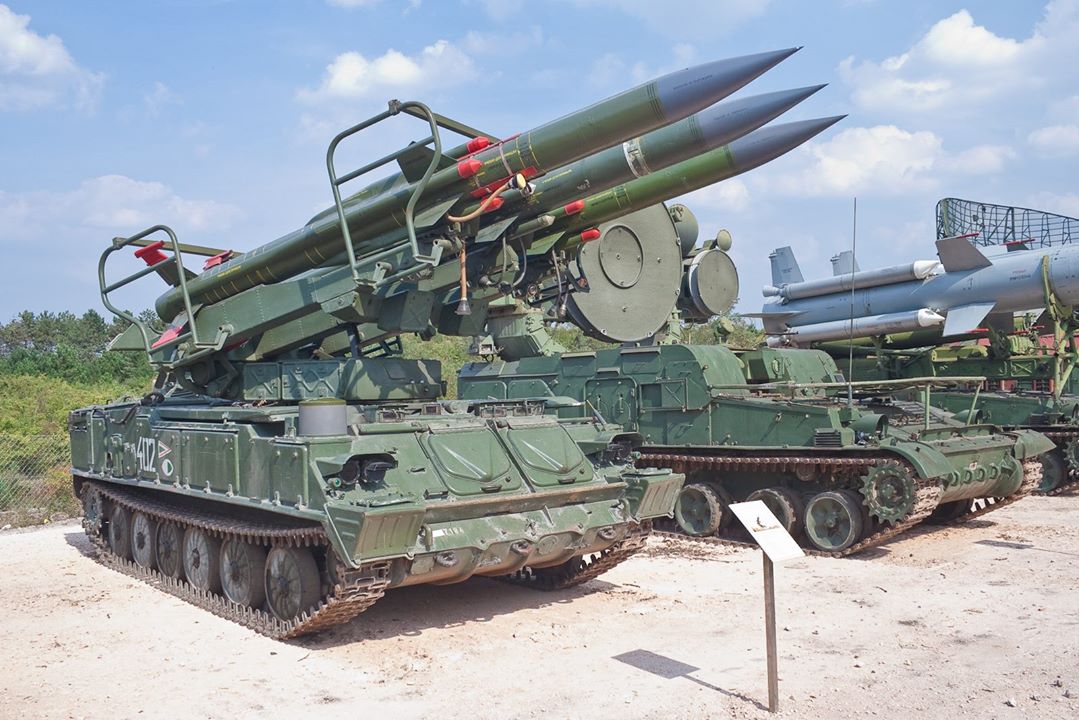
The last photo shows the 2K12 Kub missile system. Its successor, the 9K37 Buk, became tragically notorious in connection with the destruction of Malaysia Airlines Flight MH17. On 17 July 2014, three years after the original article was published, the Boeing 777-200ER, registration 9M-MRD, was shot down over eastern Ukraine. All 283 passengers and 15 crew members were killed. The aircraft crashed in the conflict zone near Donetsk. Reports subsequently emerged of looting at the crash site, including the theft of victims’ personal belongings. According to the Dutch-led Joint Investigation Team, the Buk launcher used to destroy MH17 originated from the Russian Armed Forces’ 53rd Anti-Aircraft Missile Brigade, based near Kursk.
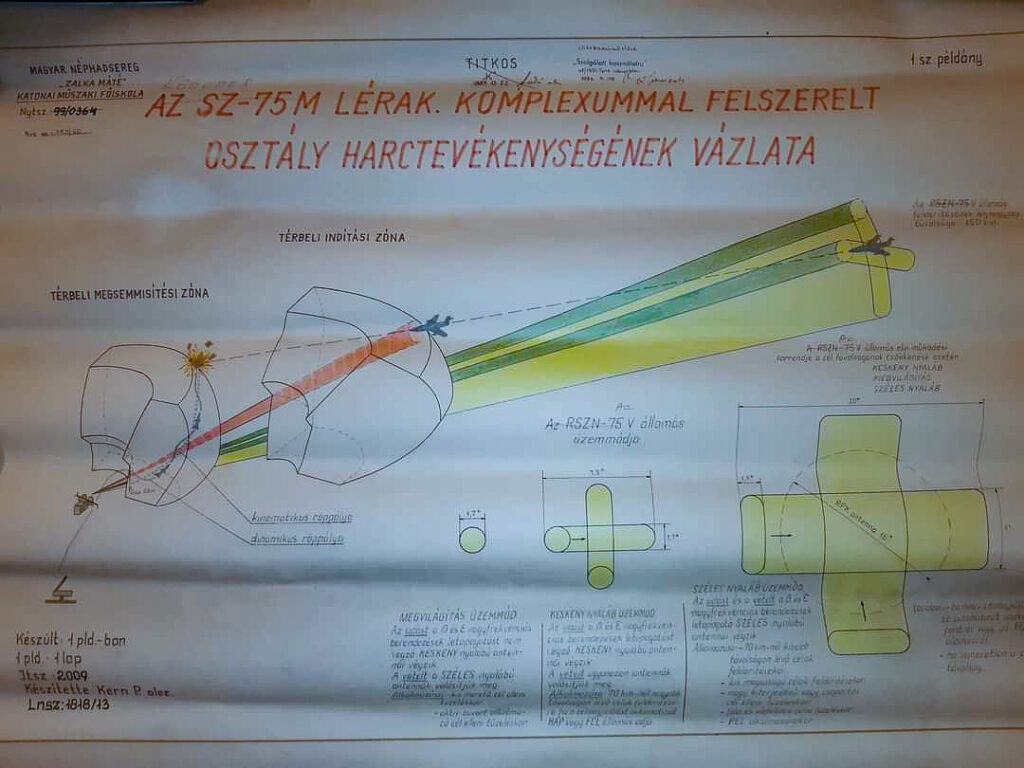
(Formerly classified Top Secret.)
Editor’s note (September 2026): Russia’s war against Ukraine has fundamentally changed the role of ground-based air defence. Systems originally designed to intercept fast, expensive military aircraft must now also contend with large numbers of relatively cheap unmanned aerial vehicles (UAVs), including Iranian-designed Shahed one-way attack drones. Shooting down a drone costing tens of thousands of dollars with a sophisticated interceptor missile costing hundreds of thousands – or even millions – is hardly sustainable, particularly when hundreds of targets may arrive in a single night.
Consequently, Ukraine has developed a layered approach to air defence, combining conventional surface-to-air missile systems with mobile anti-aircraft guns, electronic warfare, short-range missiles and increasingly sophisticated interceptor drones. Interestingly, this has also given traditional gun-based air defence a new lease of life. The lesson is not that expensive missile systems have become obsolete: they remain indispensable against aircraft, cruise missiles and ballistic missiles. Rather, modern air defence must be capable of defeating everything from a cheap, slow-moving drone to a high-speed missile, without exhausting its ammunition or bankrupting its operator.
The Cold War missile bases surrounding Budapest are tangible reminders of an era when enormous resources, sophisticated engineering and thousands of highly trained personnel were devoted to preparing for a conflict everyone hoped would never come. Most of the missiles are long gone, their launch pads are crumbling, and nature is reclaiming the firing positions. Yet their history remains worth preserving – not least because it reminds us how quickly yesterday’s closely guarded military secrets can become the industrial archaeology of tomorrow.
A 11/2 és a 11/9 a térképen fel van cserélve.
A felsorolásban a 11/16 is technikai osztály.
Volt tüzér.
Köszönöm. Azt már Tímár Gábor is jelezte, hogy a térképen a két szám fel van cserélve. A táblázat az eredeti kéziratban még jó volt, de nyomtatásban már rosszul jelent meg, mert az összevont cellák elvesztek a tördelés során. Itt kijavítottam őket, és most a táblázat nem képként van berakva, így ki is lehet másolni a koordinátákat.